We know the richly storied accounts of Swedish, Danish, and Norwegian royalty and nobility dating back over 1000 years to Viking times. But, what about Finland – did the Finns and Finland ever have their own King, or were they fated to ‘make do’ by sharing other people’s sovereigns?
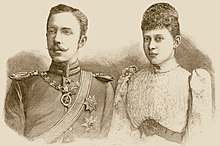
Prince Friedrich Karl, Landgraf of Hesse, was the brother-in-law of Kaiser Wilhelm II, having married Kaiser Wilhelm’s sister, Princess Margarethe (grand-daughter of Queen Victoria) in January 1893.
At the fateful moments in 1918, Friedrich Karl was 50, married, with 6 sons (two sets of twins, one set died fighting in WW1).
Prince Friedrich Karl was elected King of Finland on 9 October 1918, but renounced the throne just 66 days later on 14 December 1918. He never even managed to get to Finland at all!
However, was he in fact ever legally elected? By whom? How? Under what circumstances, and constitution?
It’s time we delved into a little-known curious by-way of history, which in many ways resembles the way that Sweden acquired the Royal House of Bernadotte, in 1809/1810.
Professor David Goldsmith will take us through the maze of muddle, mishap and machination, which characterised the accession (or not) of Friedrich Karl of Hesse – the first, last, and never-King of Finland.
The talk is £5 for Members of the Anglo-Finnish Society and the Anglo-Swedish Society and £10 for guests.
A pre-talk reception and lunch will be held at Lincoln’s Inn at £35 per head including the drinks reception, a starter, a main course and and a glass of wine and table water. Desserts are an optional extra on the day paid for by attendees.
This event is organised in cooperation with the Anglo-Swedish Society.
Bookings closed.